Construction for Property Management Firms in Cheyenne
Contractor for Cheyenne property management firms: tenant improvements, hail and wind repairs, roofs and paving, all done safely in occupied buildings.

Hail the size of baseballs fell on downtown Cheyenne on August 1, 2025, and every property manager with a flat roof, a parking lot or a row of rooftop units spent the following weeks on the phone with adjusters, tenants and contractors. Storms like that are not rare enough to ignore here. The same date in 1985 brought a hailstorm and flash flood that inundated Dry Creek, Crow Creek and downtown, and the National Weather Service recorded 6.06 inches of rain in 24 hours, a Wyoming record.
We build for property management firms and the owners they represent, and much of that work happens in buildings that are open for business. That means tenant improvements between leases, roof and envelope repairs after weather, parking and drive lane reconstruction, life safety upgrades and the occasional full renovation when a space has to be repositioned. A manager's measure of a contractor is simple: did the tenants stay happy, did the budget hold, and did the paperwork arrive in a form the owner could file?
The construction trade partners work around lease obligations, shared access, delivery windows and the fact that a loud day for us is a bad day for your tenant.
Tenant work, roofs and paving for managed properties
Typical assignments include suite buildouts and re-demising, common area and lobby renovation, restroom and accessibility upgrades, storefront replacement, roof replacement with new insulation and drainage, and parking lot and drive lane work. At the Dell Range corridor, where Frontier Mall has operated at 1400 Dell Range Boulevard since March 1981 as a single-level mall of 519,471 square feet, the owners and managers of retail property deal with tenant turnover and storefront changes continuously. Our tenant improvement work is scoped to that rhythm: short, defined, and coordinated with the leasing team.
Older downtown buildings call for a different approach. The Downtown Cheyenne Historic District covers 205 acres and 67 buildings, and owners of buildings there often face hidden conditions behind finished walls, aging mechanical systems and masonry that needs careful repair. We survey first, document what we find with photographs and short written notes, and bring the owner a choice of repair strategies before opening anything up.
Keeping tenants safe while the building stays open
Working in an occupied building changes the safety plan. We separate construction traffic from tenant and customer routes, protect entrances and exits, post clear signage, and keep egress paths open at all times. Dust, noise and odors are controlled with barriers, negative air where needed, and scheduled hours for the disruptive work. Hot work, roof penetrations and utility shutdowns need written notice to the manager, and we give it in advance, not on the morning of the work.
Fire alarm and sprinkler impairments are the items we are most careful about. Any shutdown is planned with the manager, the building's fire protection contractor and the local authority, and the system goes back into service before we leave for the day. Our phased construction in occupied buildings practice also covers temporary protection of finishes, keys and access control, and a daily end-of-shift cleanup so the next tenant who walks the corridor does not know we were there.
Hail, wind and drainage on managed roofs and lots
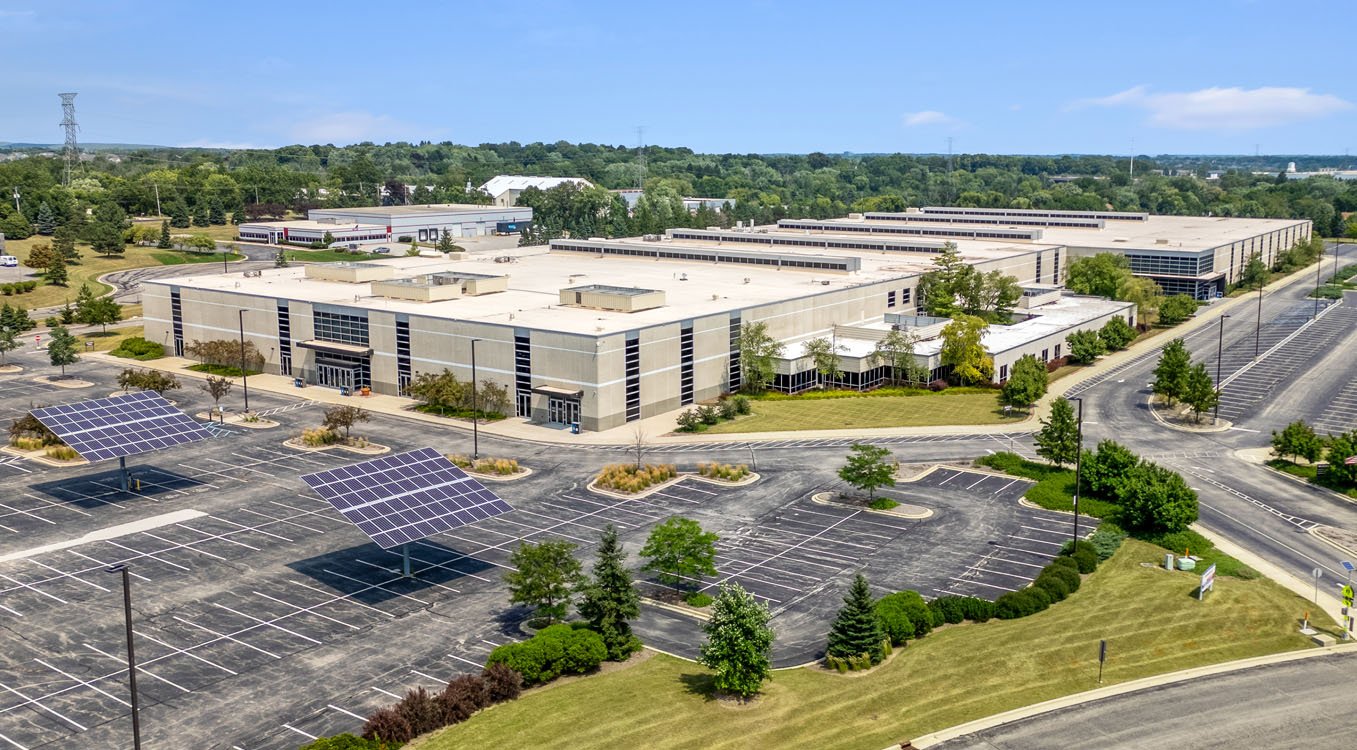
Roofs deserve their own attention. Wind loads, drifting snow and hail should drive the specification: Laramie County's published criteria list a 32 lb/ft2 ground snow load and a 105 mph wind design speed, and the largest hail in the August 2025 storm, about three-inch stones, fell eight miles southwest of Burns. We recommend membranes, fasteners, edge metal and rooftop equipment curbs that tolerate that kind of weather, and we photograph every layer for the owner's insurance file.
Parking and drainage come next. A lot that pools water in a thunderstorm, or a loading apron that heaves in a freeze, becomes a liability claim. The trade partners for parking lot construction look at subgrade, slope and storm inlets before they talk about asphalt thickness, because frost depth of 36 inches in the county's published table means poor subgrade will show up as cracking quickly. We also write a warranty that tells your tenants who to call.
Capital planning and what drives repair cost
Owners look for predictable capital planning, so we help managers build it. A condition assessment gives you a prioritized list of roofs, paving, mechanical equipment and envelope items with rough costs by year. Once a repair is approved, we price it with clear allowances for hidden conditions and an agreed way to handle surprises, so your approval authority does not become a bottleneck.
Cost drivers are mostly timing and access: after-hours labor, winter protection, small-quantity material orders and the cost of keeping a tenant open during the work. We tell you where it is cheaper to bundle roof, paving and storefront scopes into one mobilization, and where splitting them protects cash flow. Insurance-funded repairs follow the adjuster's scope, and we document the work in the format the carrier expects.
Properties we serve in Cheyenne and the county
We serve property managers across Cheyenne and Laramie County, with regular work in the retail corridor along Dell Range, in the downtown and depot district, and in office and flex buildings near the interstates. Managers who also handle a Dell Range and Frontier Mall corridor property will find the construction trade partners familiar with its access constraints.
Many managers work for developers who have just stabilized a project, and we also build for commercial real estate developers on the front end, so the handoff from construction to operations is something we have already thought through. Managers of lodging properties will find the same occupied-building practices apply to the work we do for hospitality groups.
Tell us what needs attention
Send us the address, the problem and the tenant situation. We will visit, document conditions and return a scope you can take to your owner.

Common Questions
How quickly can you respond after a hail or wind event?
We prioritize temporary protection first: tarping, securing loose edge metal, and stopping active leaks. Permanent repair follows once the adjuster has documented the damage and the owner approves the scope. After a regional storm every roofer and glazier is busy, so we advise managers to keep a pre-approved contractor on file rather than looking for one on the day of the storm.
Can you build out a suite while the neighboring tenant stays open?
Yes, and most of our tenant work happens that way. We build a temporary wall, control dust and noise, schedule loud work for off hours, and agree on delivery routes with the manager. If the neighbor sells or serves food, we add odor and vibration controls.
Who pulls permits for work in an older downtown building?
We do. Because Wyoming codes are enforced locally, we confirm with the building department whether the City or the county reviews the property and which code edition applies to the alteration. We also check early whether a building's historic district setting affects storefront and exterior choices.
What should a property manager ask a contractor about insurance and lien waivers?
Ask for current certificates naming the owner and the management company, and ask how subcontractor lien waivers are collected with each payment application. We provide both as a standard part of each pay request, which makes the owner's accounting team's job easy.
Can you give us a multi-year plan instead of one-off repairs?
We can. We survey your roofs, paving and building systems, then order repairs by risk and cost, so your capital plan reflects what will actually fail first rather than a calendar assumption.