General Contractor in Laramie, Wyoming
Commercial, institutional and light industrial construction in Laramie, planned for 7,165 foot elevation, heavy snow, university owners and a short season.
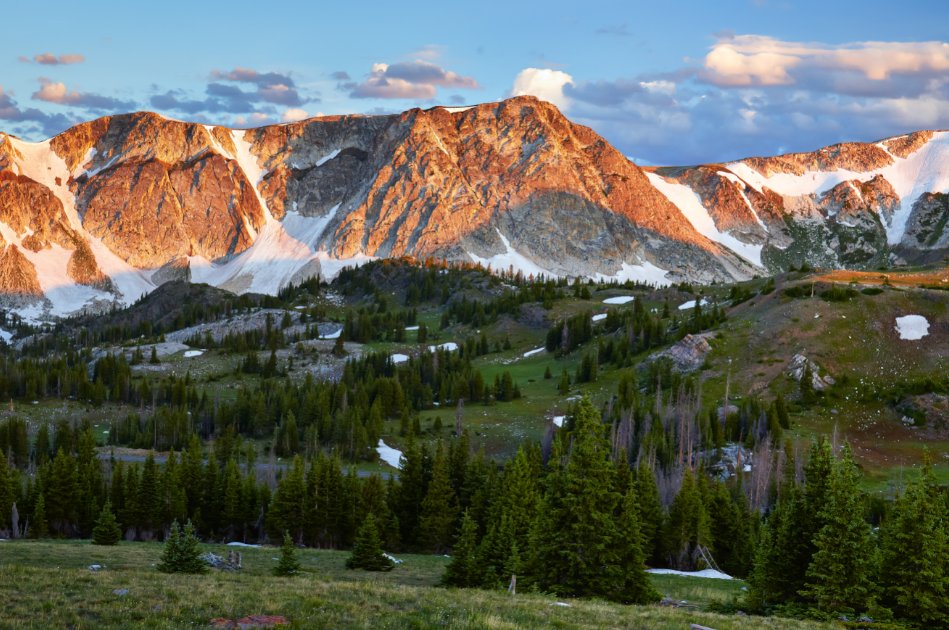
At roughly 7,165 feet, Laramie gets about 11 inches of precipitation and about 48 inches of snow in a typical year, and a general contractor working there has to plan for a building season that starts later and ends sooner than the one down the interstate. We build for institutional, technology, light industrial and commercial owners in Laramie with that climate priced and scheduled from the first meeting, so winter becomes a line in the plan rather than a surprise in the change log.
The city sits about 50 miles west of Cheyenne on I-80, which makes it a practical extension of our Cheyenne operation rather than a separate market. Crews, equipment and material deliveries travel the same corridor, and the same project team can walk a Laramie site in the morning and a Cheyenne permit meeting in the afternoon.
What changes in Laramie is the owner. A large share of the work comes from the university and the research and technology users that gather around it, and those owners ask for different things than a warehouse developer does: quiet mechanical systems, flexible lab and classroom space, careful construction around occupied buildings and detailed closeout documentation.
A university town on the I-80 mainline
Laramie is served by I-80, US 30, US 287, WYO 130 and WYO 230, with I-80 Business running through the city, and it sits on the Union Pacific mainline. That makes it a natural stop for freight and regional distribution, and it keeps material supply reasonable for the steel, precast and concrete scopes that dominate commercial work. The University of Wyoming enrolled about 8,200 students for in-person instruction in fall 2024, plus nearly 2,300 in online programs, which sustains steady demand for housing, student services, labs and the small commercial buildings that serve a campus population.
Technology and light manufacturing sit alongside it. Cirrus Sky Technology Park, on the city's highest ridgeline about a mile from the campus, is described as Wyoming's first technology-zoned business park and is marketed as shovel-ready. Owners considering a research or office building there should talk to us early about foundations and site utilities on a ridge exposed to wind.
Building at altitude and in wind
Cold semi-arid climate and elevation drive three decisions on every Laramie project. First, foundations: frost depth, soil conditions and drainage have to be confirmed against the local design criteria rather than assumed from a Cheyenne job. Second, the envelope: wind-driven snow finds every gap in a roof edge, louver or door threshold, so we spend time on details that would be minor at lower elevation. Third, mechanical systems: equipment is sized and located for cold starts, and rooftop units get snow guards and service access that holds up in January.
We also confirm which jurisdiction's criteria and code adoption apply before any design is frozen. Wyoming has no single statewide code, and requirements vary by city and county, so we ask the local building department for design loads and adopted editions in writing and carry them on the drawings. That avoids the expensive late discovery that a snow load or footing depth was set from the wrong table.
Sequencing the short season
Laramie schedules revolve around the enclosure date. We work backward from the day the building needs to be weathertight and heated, then place foundation, steel or tilt panels and roof in the order that gets there with the least exposure. Exterior concrete and masonry go early in the season, and anything that cannot be protected is moved out of the coldest months.
On campus-adjacent and occupied sites, the calendar also includes the academic year. Noise, vibration, utility shutdowns and crane picks are timed around classes, move-in weeks and events, and we publish a two-week look-ahead so facility staff always know what is coming. Our approach to construction management at risk suits this kind of owner, because the open-book pricing and phased guaranteed maximum price give a university or a public board something firm to approve.
Owners who build in Laramie
Education is the obvious one, and our work with education institutions covers classroom, lab, housing and support buildings. The same crews also build for technology and research users, small manufacturers and the local retail and hospitality businesses that rely on I-80 traffic. The City of Laramie has sought a state Business Ready Community grant of nearly $3 million to build a 15,500 square foot manufacturing building in Laramie River Business Park, a reminder that public-private industrial projects follow a grant calendar as well as a construction one.
That calendar matters to us. When an owner is waiting on grant approval, we price in stages, hold subcontractor quotes with clear expiry dates and keep the preliminary schedule flexible, so a decision in the spring does not mean redoing the estimate. For owners shaping an older building, the trade partner team for renovation and adaptive reuse handles the surveys and abatement that often decide the budget.
What we manage directly
We keep control of the scopes that decide schedule in a short season: excavation and footings, concrete flatwork, rough carpentry, framing and protection of the work already in place. Scheduling and supervising those items directly lets us react to a forecast the same day, and it keeps the cold-weather concrete measures consistent from one pour to the next. For research and flex space, our flex and light industrial experience carries over directly.
The remaining trades are bought out from qualified regional subcontractors, and we bring them to the site early. If you are comparing a Laramie site with another in the area, the Laramie County Community College campus and our Cheyenne work show how the same team handles a different owner and climate.
Start a Laramie project
Tell us the site, the use and the date you want to be open. We will review the elevation and wind exposure, confirm the local design criteria and return a staged schedule and budget.
Common Questions
How much does Laramie's elevation change the construction schedule?
A good deal. At about 7,165 feet with roughly 48 inches of snowfall a year, the window for exterior concrete, masonry and roofing is shorter than in Cheyenne. We set the enclosure date first and build the sequence backward from it, and we price winter protection as its own line so you can see what it costs.
Which building code applies to my Laramie project?
Wyoming has no single statewide building code, so cities and counties adopt and enforce their own. We ask the local building department for the adopted editions and the design snow, wind and frost values in writing before drawings are finalized, then carry them on the code study sheets.
Can you build near the university without disrupting classes?
Yes, with planning. We stage noisy work, crane picks and utility shutoffs around the academic calendar and give facilities staff a rolling two-week look-ahead. For a project in an occupied building, we agree on dust, noise and access rules before any demolition begins.
Is Cirrus Sky Technology Park ready for a new building?
The park is marketed as shovel-ready and sits on a ridgeline about a mile from campus, so utilities and access are the starting point. We would still review soils, wind exposure and utility capacity for your specific footprint before committing to a budget.