Campus and Education Construction at Laramie County Community College
Education and institutional construction around the Laramie County Community College campus in Cheyenne, phased for occupied buildings and winter.
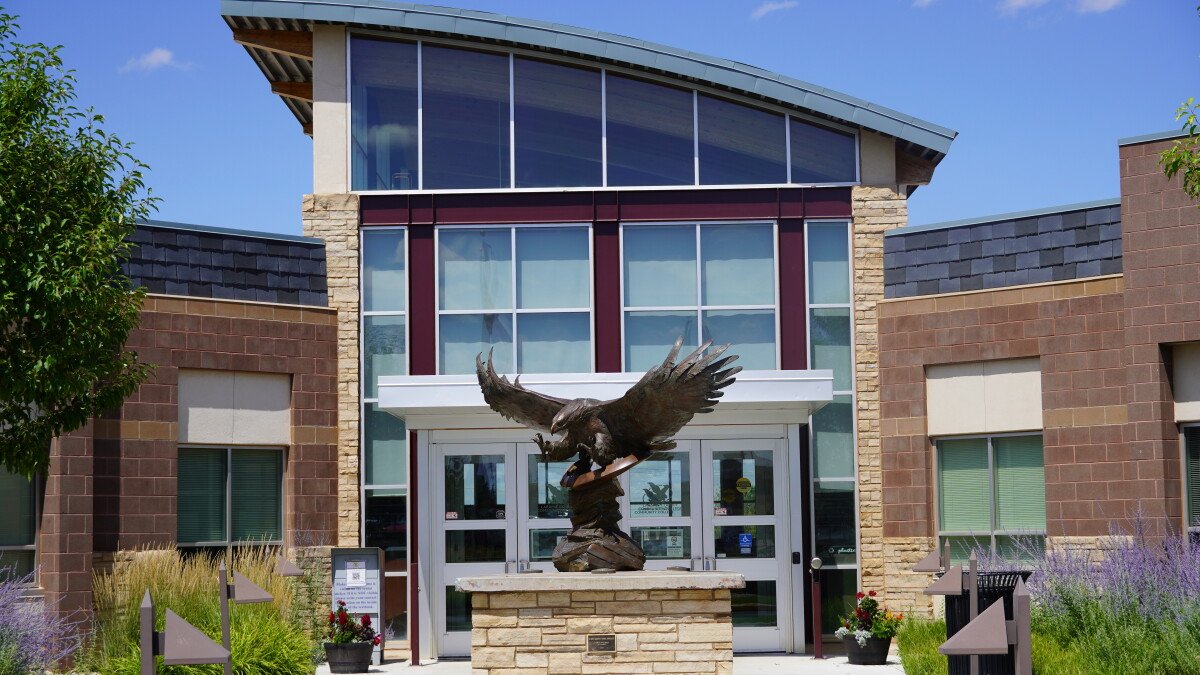
A campus that stays open while you build on it asks for a different kind of contractor than an empty field does. Laramie County Community College's Cheyenne main campus now covers 271 acres, grown from 168 acres of donated pasture, and that much ground means classroom buildings, residence halls, athletics space and parking all in use while new work goes in beside them. We build education and institutional projects in that setting, with fencing, haul routes and noise windows agreed before the first footing is dug.
The college reported 5,389 students in fall 2022 and a budget of $70,844,840, which tells you how many people cross the grounds on an ordinary weekday. Its facilities include a Recreation and Athletics Center, a fine arts gallery and residence halls, and each type carries its own occupancy rules, life-safety systems and mechanical loads. A renovation in one of them is almost never a single-trade job, and the schedule depends on how well the trades are sequenced around the academic calendar.
Whether the project is a new academic wing, a residence hall refresh or a site package for drives and parking, we start by walking the campus with facilities staff. They know which doors, utility lines and pedestrian paths cannot be closed and which can, and that knowledge goes straight into the logistics plan.
What we build on and around the campus
Most campus work falls into three groups. The first is new academic and student-life buildings, usually steel or masonry-and-steel frames on spread footings, where our education facility construction work is the starting point. The second is renovation of existing space: lab and shop upgrades, finish and mechanical replacement, accessibility corrections and the quiet infrastructure work that never appears in a brochure. The third is site work, including drives, lots, drainage and utility tie-ins.
We schedule and supervise the concrete, carpentry and site work trade partners, which matters on a campus because the same team can return for a punch-list fix without a new mobilization. For specialty scopes, such as kitchen equipment, fire alarm and building automation, we bring in trade partners early and let them review the drawings before bid day rather than after award.
Building around semesters, not against them
Academic calendars set the real deadlines. A residence hall renovation has to finish before move-in, a lab upgrade has to be ready for the first lecture of the term, and noisy work near classrooms belongs in breaks and evenings. We build the schedule backward from those dates, then check whether the long-lead items, such as switchgear, rooftop units and elevator components, can actually arrive in time. Our phased construction on occupied sites approach is built around that exact exercise.
Cheyenne weather puts its own limits on the plan. At roughly 6,000 feet, exterior concrete, masonry and roofing work goes best from late spring through early fall, and winter work needs enclosures, heat and cold-weather mixes that carry real cost. Where a summer shutdown is the only window for work inside a building, we move the exterior envelope earlier so the interior crews are not racing the first hard freeze.
A multi-campus college changes how work is packaged
LCCC operates more than one location: the Cheyenne campus, an Albany County Campus in Laramie and an outreach center in Pine Bluffs. That spread matters to the people planning capital work, because bundling similar scopes across sites can cut mobilization and give a single estimator a consistent set of assumptions. When an owner wants to compare a combined package with separate bids, we price both and show where the savings or risks are.
Public institutions also expect clean paperwork. Allowances, alternates, unit prices and change-order logs need to be readable by a board member who was not in the room when the decision was made. We keep our cost reports in plain language and tie each change to a drawing, an email or a field directive.
Codes, reviews and who signs off
Wyoming does not have a single statewide building code. The International Code Council notes that codes are adopted and enforced locally, and the state delegates enforcement authority to qualifying cities and counties, which must keep their standards at least equal to the state's within six months of a new state adoption. Laramie County adopted the 2024 International Building Code with amendments effective January 1, 2025, and the county's published criteria list a 32 lb/ft2 ground snow load, a 105 mph wind design speed and a 36 inch frost line in its residential table.
For a commercial or institutional building, loading follows IBC Chapter 16 and every design criterion belongs on the code study sheets, so we confirm with the structural engineer which jurisdiction reviews the permit before drawings are finalized. Fire review runs alongside building review, and we schedule the two in parallel rather than one after the other.
Services that usually travel with campus work
Campus projects rarely arrive alone. A new building tends to come with demolition of an older structure, a parking reconfiguration and a utility upgrade that nobody had in the first budget. We handle renovation and adaptive reuse and site development under one contract when that suits the owner, so a single schedule covers the whole footprint.
The same applies to the buyer side. Colleges and school districts procure differently from private developers, and our work for education institutions and in the education and school building category reflects bid forms, bonding and board-approval cycles that public owners expect.
Planning work on or near the Cheyenne campus?
Send us the drawings, the semester dates you cannot miss and the buildings that must stay in use. We will return a phasing plan, a preliminary schedule and a budget range you can take to your board.
Common Questions
Can you build next to occupied classrooms and residence halls?
Yes, and most campus projects require it. We agree on fenced work zones, delivery hours, crane and lift times and pedestrian detours with facilities staff before mobilizing, then update them as the semester changes. Noisy or vibrating work, such as saw cutting and breaking, is scheduled for breaks or off-hours. We also post a single contact for the campus to call, so complaints do not travel through three offices.
How long does a typical campus renovation take, from award to turnover?
A single-floor interior renovation commonly takes several months once materials are on site, and the long-lead items drive most of the calendar. Switchgear, air handlers and fire alarm panels can take longer than the construction itself. We review lead times during preconstruction, place orders at award and plan the work so the long-lead equipment lands when the rough-in is ready for it.
What does winter do to a campus site in Cheyenne?
Winter shortens the productive season for anything outside. Frost reaches 36 inches in the county's published criteria, so footings go deep and the ground must be protected before pours. Wind is a constant, so crane picks, roofing and exterior framing are planned with shutdown thresholds. Interior work in an enclosed, heated building continues, which is why we push to get a building weathertight before the first hard cold.
Do you handle projects at the outreach and Laramie campuses too?
We can. LCCC operates an Albany County Campus in Laramie and an outreach center in Pine Bluffs, and similar scopes at several sites are often cheaper under one mobilization plan. We price a combined package and a set of separate bids so the college can compare them, then explain where the difference comes from.
How do you keep public-owner paperwork clean?
We track every allowance, alternate and change order against the contract and the drawings, and we keep a running log that a board member or auditor could follow without a meeting. Pay applications match the schedule of values, and closeout documents, warranties and as-builts are assembled during construction instead of after it.