Data Center Construction Along the I-80 and I-25 Corridor in Cheyenne
General contracting for data halls, enclosures and supporting site work along the I-80 and I-25 corridor in Cheyenne, built around power, fiber and wind.
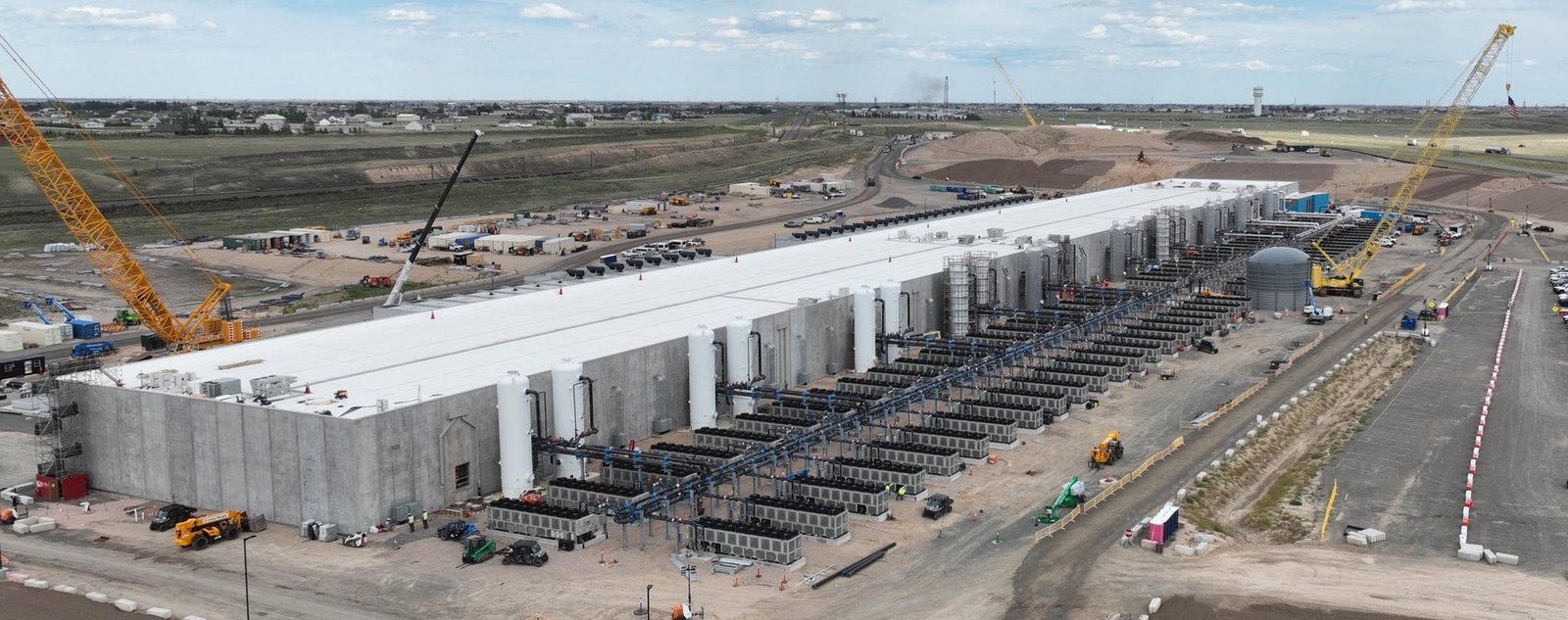
Megawatts decide where a data hall goes, and in Cheyenne the corridor along I-80 and I-25 is where the power, the fiber and the flat ground line up. Cheyenne's first Microsoft data center was built about 20 years ago just north of the Walmart Distribution Center near the two interstates, on a business park financed with a Wyoming Business Council matching grant. A city study found that park returned $35.70 in tax revenue for every public dollar spent on it. That early result still shapes how owners and the city think about the next building.
We build the structure that goes around the equipment: foundations and slabs, structural steel or precast shells, roofing, mechanical yards, security perimeters and the site utilities that feed them. The IT and electrical systems are specialized, and we work with the owner's design team and trade partners to coordinate them, but the shell, the schedule and the site are where a general contractor earns its fee. Delays in any of those hold up the day equipment can be energized.
Operators who come to Cheyenne usually have a repeatable design and a tight delivery calendar. They need a builder who can read a standard set, spot what has to change for local wind, snow and frost, and keep the critical path clear of avoidable surprises.
Fiber, backbone and a growing list of operators
The I-80 corridor through Cheyenne runs along a major internet backbone that follows the Union Pacific right of way, which is a large part of the case for building here. Beyond Microsoft, local reporting names several other data center investments, including a regional bank and a satellite television operator, and the mayor said two more data center companies were considering significant investment. The Cheyenne Chamber CEO has said that data center companies have collectively put $3.1 billion into the area from 2012 onward.
A planned $1.2 billion solar project with 1.2 million panels near Cheyenne could supply Meta's data center, according to a July 2024 report. For a contractor, the point is not the specific project but the pattern: private owners are building here because the power and connectivity story works, and they expect construction to keep pace. Sites near the High Plains Business Park and North Range Business Park are where much of that attention sits.
The scopes we manage most closely
Concrete is the first scope we manage most closely on a data hall. Slab flatness, vapor control, equipment pads and trench work for underground duct banks all need the same attention to elevations and tolerances, and a single team accountable for them removes handoffs. Our commercial concrete floors work covers the finishing methods, curing plans and joint layouts that raised-floor and slab-on-grade halls require.
We also coordinate the site package: grading, utilities, paving and the drainage that keeps water from a mechanical yard. Large data campuses move a great deal of dirt, and the sequence of grading, utilities and building pad is what makes the first slab pour possible on time. Our data center construction team treats that sequence as part of the building.
Design loads, codes and the first permit
Wyoming has no single statewide building code. Laramie County adopted the 2024 International Building Code with amendments effective January 1, 2025, and the County's published criteria list a 32 lb/ft2 ground snow load, 105 mph wind design speed and 36 inch frost line in its residential table. Commercial projects follow IBC Chapter 16, with all design criteria shown on code study sheets. Because the City of Cheyenne's own adoption was not confirmed in the sources we reviewed, we ask the building official which edition governs each permit.
A data center shell is often a large, lightweight steel or precast structure with big roof loads from equipment, so wind uplift and snow drifting get close attention. Prototype designs that worked elsewhere may need heavier connections, extra bracing or a revised roof drainage plan here. We flag those differences in preconstruction instead of after the structural submittals come back.
Power, workforce and the other constraints
The Chamber CEO expects electricity demand in the area to rise about 50 percent over five years, and the same article flags power supply, transmission, housing and workforce as challenges, naming Black Hills Electric as a utility partner. Those are not abstractions on a construction schedule. A late utility energization date can idle a finished building, and a thin labor pool can slow the peak of the build.
We plan around both. Early conversations with the utility about service dates, temporary power and transformer lead times go on the schedule as milestones. On labor, we pre-book key trades, keep our trade partners working across projects and talk candidly with owners about when the peak workforce will arrive and where it will live.
Sequencing a fast build in a windy place
Data center schedules are compressed. Steel or precast erection, roofing and enclosure must beat the weather, then the electrical and mechanical rough-in follows quickly. Cheyenne wind is the first thing to plan around for crane work and roofing, so we track forecasts daily and set shutdown limits with the crane and roofing contractors before work begins.
Frost sets the foundation schedule. Footings and slabs should be poured before hard freezes arrive, or protected with blankets and heat if the date cannot move. We also reserve fall and early winter for interior work whenever the building is enclosed in time, so the owner sees steady progress through the coldest months.
Services that shape a data center project
Two services have outsized influence on a data center schedule. Long-lead procurement covers generators, switchgear, chillers and transformers that can take many months to arrive, and our team tracks them from purchase order to delivery. Commissioning and closeout is the final stretch, where integrated systems testing turns a built facility into an operating one.
We also coordinate with owners and developers throughout. Commercial real estate developers building powered shells for later tenants have different needs than owners building for their own use, and we price and plan each differently.
Planning a data center build in Cheyenne?
Send us the site, the load profile and the date you need power. We will review constructability, tell you what to order first and return a schedule and a budget range.
Common Questions
Why do operators choose the Cheyenne corridor?
Operators cite fiber along the I-80 backbone, available land and the existing cluster of facilities. A city study of the first park found returns of $35.70 in tax revenue per public dollar. From a construction view, the corridor also has direct interstate access for equipment deliveries.
How does local wind affect a data center shell?
Laramie County's published design wind speed is 105 mph, and open ground on the plains offers little shelter. Roof edges, parapets, rooftop equipment and large wall panels need connections sized for uplift. During construction, wind limits crane picks and roofing, so schedules include weather allowances.
What are the biggest schedule risks?
Utility energization, long-lead electrical equipment and winter weather. The Chamber has flagged power supply and transmission as challenges, so we confirm service dates early. We also place orders for switchgear and generators as soon as the owner approves the design, instead of waiting for permits to finish.
Can you build a powered shell for a later tenant?
Yes. A powered shell includes the building envelope, site, utilities and base electrical service, with tenant fit-out completed later. We price the shell and the future fit-out separately, and design the structure so later equipment loads do not require modifications.
Do you handle the commissioning phase?
We coordinate it. Commissioning agents and equipment vendors lead the technical tests, while we make sure the building is ready, trades are available, punch items are closed and documentation is complete.